Why I Ditched Asana for a Spreadsheet (And You Should Too)
Why simple spreadsheets beat Asana for solopreneurs and freelancers tired of bloated project management. Find your minimalist solution fast.
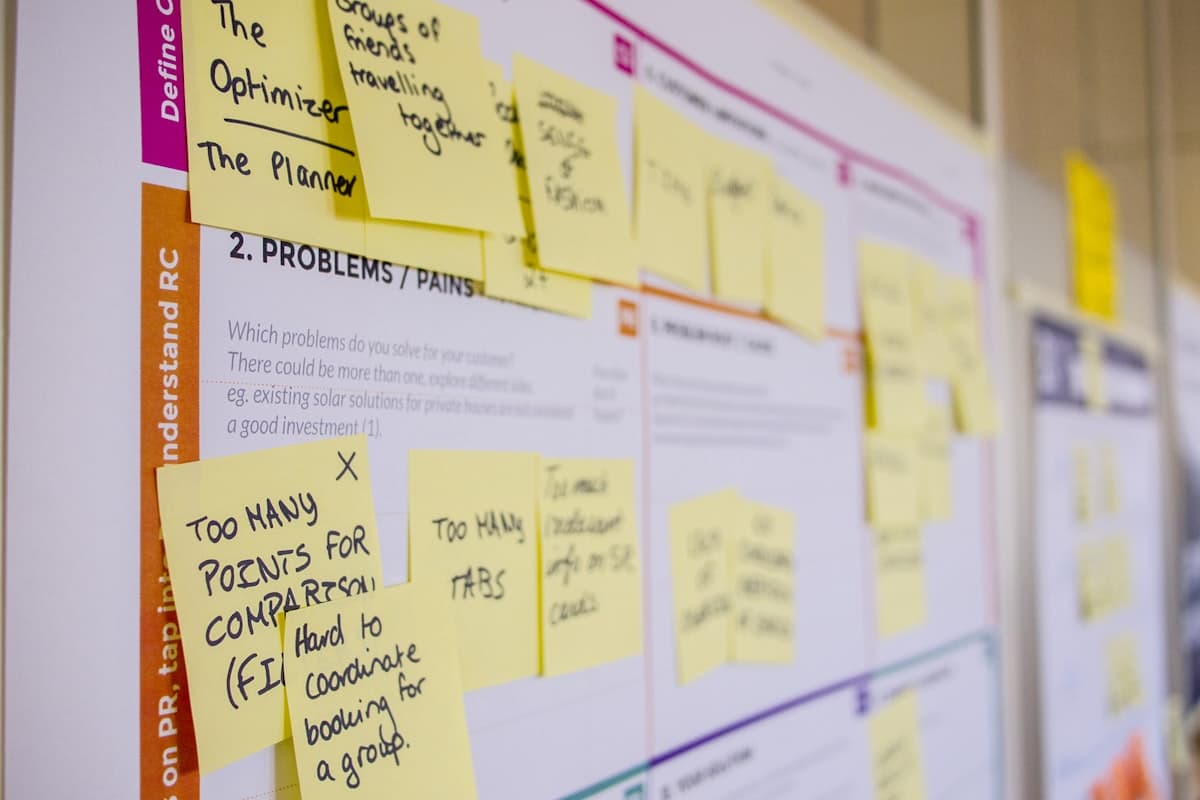
TL;DR: Asana is overkill for solopreneurs and small teams — a spreadsheet gives about 80% of the value with zero bloat, instant setup, and full control. If you need slightly more structure, a minimalist unified dashboard beats enterprise PM overhead.
Why project management tools have become unbearable in 2025
I spent three hours last week configuring Asana for a simple freelance project. Three hours. Setting up custom fields, creating templates, navigating nested menus, and watching tutorial videos for features I'd never use. By the time I was "ready" to start working, I'd lost half a day to setup theater.
This is the state of project management tools in 2025: bloated, overengineered, and fundamentally disconnected from how solo workers actually operate. What started as tools to simplify collaboration has morphed into enterprise-grade systems that demand more time configuring than actually executing projects.
The problem isn't that these tools lack features—it's that they have too many. When you're managing 3-7 projects as a solopreneur, you don't need Gantt charts, resource allocation matrices, or 47 different view types. You need three things: what needs doing, when it's due, and who's responsible (usually just you).
Here's what you'll learn in this post:
- Why spreadsheets deliver 80% of project management value with 5% of the complexity
- The hidden costs of "free" project management tools (spoiler: your time)
- When to actually upgrade from a spreadsheet to dedicated software
- Real-world scenarios showing how simple project tracking works for freelancers
I ditched Asana after two years of fighting it. I went back to Google Sheets for most projects. And you know what? My productivity went up, not down.
What is 'project management bloat' (and why it's killing your productivity)
Project management bloat is what happens when software companies optimize for selling to enterprises instead of serving actual users. It's the accumulation of features, screens, settings, and complexity that make tools harder to use, not easier.
Think about it: Asana started as a simple task manager. Now it has portfolios, goals, workload management, forms, rules, integrations, custom fields, multiple timeline views, and a feature set that requires certification courses to master. That's bloat.
The feature creep problem: When tools try to do everything
Every project management tool follows the same trajectory. They launch simple and focused. Early users love them. Then comes the enterprise pivot: sales teams demand features for Fortune 500 clients, investors push for "moat-building" functionality, and before you know it, the tool that took 5 minutes to learn now requires a 40-page onboarding guide.
Monday.com is the perfect example. It started as a visual task board. Now it's a "work operating system" with CRM modules, development tracking, marketing workflows, and enough features to make your head spin. For a freelance designer managing five client projects? Complete overkill.
The feature creep problem hits solopreneurs hardest because you pay the complexity tax without getting any benefit. You navigate through menus you'll never use, ignore notifications about features you don't need, and waste mental energy deciding which of seventeen view types best suits your workflow.
The collaboration paradox: Solo work doesn't need team features
Here's the dirty secret about project management tools: 80% of their features exist for team collaboration. Assignment notifications, comment threads, approval workflows, team calendars, resource balancing—all designed for coordinating multiple people.
If you're a solopreneur, you don't need to "assign" tasks to yourself. You don't need approval workflows when you're the only approver. You don't need commenting features when there's no one to comment. These features aren't just useless—they actively slow you down by adding navigation layers between you and your actual work.
The collaboration paradox means you're using a tool built for 50-person teams to manage your solo operation. It's like buying an 18-wheeler to commute to your home office.
The setup tax: Hours spent configuring vs. actually working
Every sophisticated project management tool demands configuration before you can use it effectively. Create your workspace. Set up projects. Define custom fields. Build templates. Configure automations. Set notification preferences. Integrate other tools. Watch tutorial videos.
This is the setup tax: time invested in configuring software instead of doing actual work.
I timed this recently with a new Asana workspace. From signup to "ready to use" took 4.5 hours. That's 4.5 hours I could've spent designing, writing proposals, or talking to clients. Instead, I was dragging task cards and setting up recurring task templates for projects that might never materialize.
Spreadsheets? Setup time: zero minutes. Open a new sheet, type column headers, start adding rows. You're working, not configuring.
Best simple project tracking solutions for solopreneurs in 2025
Let's compare five approaches to project management, from simplest to most complex. Each has trade-offs. The right choice depends on your specific needs, not which tool has the most features.
Option 1: Google Sheets/Excel — The ultimate minimalist baseline
Google Sheets is the baseline that every other tool should be measured against. It's instant, flexible, and requires zero onboarding. You control the structure completely.
Key features, pros and cons:
Pros:
- Setup time: literally 30 seconds (create spreadsheet, add headers, done)
- Zero learning curve if you can type in a table
- Infinite customization—build exactly what you need
- Works offline, syncs automatically
- Free forever (no feature gating, no pricing tiers)
- CSV export means your data is never locked in
- Formulas let you calculate totals, deadlines, budgets automatically
Cons:
- No built-in reminders or notifications
- Manual work to maintain (no automation)
- Doesn't scale well beyond 10-15 active projects
- Sharing with clients requires some formatting work
- No mobile app optimized for project views
Pricing and who should use it:
Free. Best for solopreneurs managing 3-10 projects who value speed and control over automation. Perfect if you're comfortable with basic spreadsheet formulas and don't need fancy views.
Quick setup tips:
Create columns for: Project Name, Client, Status (To Do/In Progress/Done), Deadline, Priority (High/Medium/Low), Notes. Add a tab for each active project with detailed task breakdowns. Use conditional formatting to highlight overdue items in red. Takes 5 minutes total.
Option 2: Notion — Flexible but increasingly bloated
Notion started as a minimalist note-taking tool and evolved into an everything-app. It's powerful and flexible, but that flexibility comes with complexity.
Key features, pros and cons:
Pros:
- Beautiful, modern interface that feels less corporate than traditional PM tools
- Combines notes, databases, and project tracking in one place
- Templates community provides pre-built project management setups
- Linking between pages creates connected knowledge base
- Free tier is genuinely useful (not just a trial)
Cons:
- Learning curve is steep—database properties, relations, and formulas take time
- Performance degrades with lots of data (pages load slowly)
- Feature bloat is creeping in (buttons, charts, AI, automations)
- Mobile experience is clunky for actual project management
- Notification system is weak compared to dedicated PM tools
Pricing and who should use it:
Free for individuals, $10/month for Plus. Best for solopreneurs who want to combine project tracking with documentation, client notes, and knowledge management. Wrong fit if you just need a simple task list.
Option 3: Asana — Feature-rich but overwhelming for solo work
Asana is what most people think of when they hear "project management software." It's polished, powerful, and completely overkill for solo work.
Key features, pros and cons:
Pros:
- Robust feature set covers every project management scenario
- Multiple view types (list, board, timeline, calendar)
- Strong automation rules can eliminate repetitive work
- Excellent integrations with other business tools
- Templates for common project types
Cons:
- Setup takes hours, not minutes
- Interface is cluttered with features you'll never use as a solopreneur
- Free tier limits mean you hit paywalls quickly
- Designed for teams—most features assume multiple users
- Notification overload out of the box
Pricing and who should use it:
Free for basic use (limited features), $10.99/user/month for Premium. Best for small teams (3-10 people) managing complex projects with dependencies. Massive overkill for solopreneurs managing straightforward client work.
Option 4: Monday.com — Enterprise focus, wrong audience fit
Monday.com markets itself as a "work operating system." That should tell you everything: it's trying to be everything to everyone, which means it's optimized for no one.
Key features, pros and cons:
Pros:
- Colorful, visual interface makes data feel less intimidating
- Extensive customization through columns and automations
- Strong reporting and dashboard capabilities
- Handles both projects and CRM in one tool
Cons:
- Pricing is absurd for solopreneurs (starts at $9/seat with 3-seat minimum)
- Feature complexity requires serious time investment
- Performance issues with large boards
- Clearly built for teams of 20+, not individuals
- No meaningful free tier (14-day trial only)
Pricing and who should use it:
$27/month minimum (3 seats). Best for agencies or small businesses with 5+ team members managing multiple client projects simultaneously. Terrible fit for solopreneurs—you'll pay for seats you don't need and use 10% of the features.
Option 5: BareStack Projects — Unified dashboard without bloat
BareStack takes a different approach: combine project management with time tracking, invoicing, and CRM in one unified dashboard. No enterprise features, no bloat, just the essentials that solopreneurs actually use.
Key features, pros and cons:
Pros:
- Combines projects, time tracking, and invoicing in one place (no tool-switching)
- Setup takes under 5 minutes—no complex configuration required
- Built specifically for solopreneurs and small teams (1-10 people)
- Free forever, no credit card required
- Self-hosted option gives you complete data control
- Minimal interface means fast performance
Cons:
- Fewer view types than enterprise tools (by design)
- No advanced automation or workflow rules
- Smaller feature set means less flexibility for edge cases
- Single-developer project means slower feature development
- Not suitable for large teams or complex dependencies
Pricing and who should use it:
Free forever. Best for freelancers and solopreneurs who want simple project management combined with time tracking and invoicing. Perfect if you're tired of paying for five different tools that don't talk to each other.
Comparison table: Spreadsheet vs. project management tools
| Feature | Google Sheets | Notion | Asana | Monday.com | BareStack |
|---|---|---|---|---|---|
| Pricing | Free forever | Free / $10/mo | Free / $10.99/mo | $27/mo (3 seats min) | Free forever |
| Setup time | 30 seconds | 30-60 minutes | 2-4 hours | 3-5 hours | 5 minutes |
| Learning curve | Minimal | Moderate | Steep | Very steep | Minimal |
| Customization | Infinite | High | Medium | High | Low (by design) |
| Team features | Basic sharing | Good | Excellent | Excellent | Basic |
| Mobile experience | Good | Fair | Excellent | Good | Good |
| Data portability | Perfect (CSV) | JSON export | Limited | Limited | CSV export |
| Best for | Solo, 3-10 projects | Solo + docs | Teams 3-15 | Teams 5-50 | Solo, 1-15 projects |
Bottom line: If you're managing under 10 projects solo, spreadsheets or BareStack give you 80% of the value with 10% of the complexity. Notion works if you need combined note-taking and projects. Asana and Monday.com only make sense for actual teams with complex collaboration needs.
Deep dive: The true cost of 'free' project management tools
Free tier marketing is everywhere in project management software. Asana, Monday.com, Notion, ClickUp—they all advertise "free forever" plans. But "free" doesn't mean without cost. You pay in time, mental energy, and opportunity cost.
Hidden costs: Time spent learning complex interfaces
The average solopreneur spends 6-8 hours learning a new project management tool, according to my own informal polling of freelancer communities. That's a full workday dedicated to watching tutorials, reading documentation, and clicking through settings menus.
Asana's free tier gives you basic task management, but to actually use it effectively, you need to understand:
- The difference between tasks, subtasks, and sections
- How dependencies work
- Custom field creation and usage
- Multiple view types (list vs. board vs. timeline)
- Rules and automation basics
- Notification preferences
- Project templates
Each of these concepts requires 15-30 minutes to understand. Multiply that across a feature set designed for teams, and you've lost days to learning software instead of using it.
Spreadsheets? You already know how they work. The learning curve is zero.
Data lock-in: What happens when you want to leave
Every project management tool builds a moat around your data. Sure, they offer export features—CSV downloads, JSON backups, API access—but exporting is never as easy as importing. And your data structure gets mangled in translation.
I tried exporting two years of Asana projects last month. The CSV export gave me a flat file with cryptic column headers, lost all task dependencies, stripped out comments, and required three hours of manual cleanup to be usable anywhere else. That's data lock-in: technically you can leave, but practically it's painful enough that most people don't.
Notion is even worse. Try exporting a database with relations and rollups—you get markdown files that break the structure completely. Your carefully built project tracking system becomes useless outside Notion's ecosystem.
Spreadsheets? Copy and paste. That's it. Your data goes anywhere because it's already in the most portable format that exists.
Feature bloat tax: Paying for what you never use
The dirty economics of SaaS pricing mean you're subsidizing features you'll never touch. Monday.com charges $27/month minimum. How many of their 200+ features will you actually use? Probably 15-20. You're paying for enterprise resource planning, advanced automation, custom dashboards, integrations with tools you don't have, and view types you'll never click.
This is the feature bloat tax: the price you pay for software built for everyone instead of you specifically.
Even "free" tiers make you pay this tax in mental overhead. Every unused feature is a menu item you have to skip, a notification preference you have to configure, a tutorial video you have to ignore. That cognitive load adds up.
Deep dive: When spreadsheets actually beat dedicated tools
Spreadsheets get dismissed as "not real project management," but that's bullshit. For 80% of solopreneur use cases, a well-structured spreadsheet outperforms dedicated tools in the metrics that actually matter: speed, control, and simplicity.
Control and customization: Build exactly what you need
Project management tools give you predefined structures. You work within their mental model of how projects should be organized. Tasks have certain properties. Projects have certain views. The tool dictates the workflow.
Spreadsheets flip this dynamic. You define the structure. You decide what columns matter. You choose what to track and what to ignore.
Need to track projects by client, deadline, estimated hours, actual hours, invoice status, and payment date? That's six columns and 30 seconds of work. Want to add a "Difficulty Level" column because you need to balance hard and easy work throughout your week? Add it. Done.
Try customizing Asana to track invoice status alongside project tasks. You'll spend 20 minutes creating custom fields, another 10 minutes figuring out why they don't appear in certain views, and you'll still end up with a clunky solution that doesn't quite fit your workflow.
The control extends to formulas and calculated fields. Want to see "Days Until Deadline" automatically calculated? =B2-TODAY() in a spreadsheet column. Want to see total hours across all projects? =SUM(D:D) in a cell at the bottom. These calculations happen instantly, no automation rules required.
Speed: No loading screens, no sync delays
Spreadsheets are fast. Open the file, start typing. No loading screens. No "syncing your workspace" delays. No waiting for views to render or databases to query.
I timed this: Opening Google Sheets and adding a new project task takes 8 seconds from clicking the bookmark to hitting Enter on the new row. Opening Asana and adding the same task takes 23 seconds—the app loads (7 seconds), I navigate to the right project (5 seconds), click "Add Task" (2 seconds), fill in details across multiple fields and views (7 seconds), then click save (2 seconds).
That 15-second difference might not seem like much, but it compounds. Add 10 tasks per day, 5 days per week, and you're spending an extra 12.5 minutes weekly just waiting for software. That's 10+ hours per year wasted on loading screens.
Speed affects usage patterns too. Because spreadsheets are instant, you're more likely to actually use them. No friction means better habits. Complex tools with 23-second add times? You start batching updates or avoiding the tool entirely.
Portability: CSV files outlive every startup
Here's a truth that SaaS companies don't want you thinking about: most startups die. Even successful ones get acquired and shut down. Remember Wunderlist? Sunrise Calendar? Mailbox? All dead. Users lost access, scrambled to export data, and rebuilt workflows from scratch.
CSV files don't die. The format is 50+ years old. Every piece of software on earth can read it. It'll work in 2050 just as well as it works today.
When you build your project management system in Google Sheets or Excel, you're using a format that will outlive every VC-backed PM tool currently on the market. Your data is portable by default. You can open it in LibreOffice, Apple Numbers, Airtable, or any database tool without conversion.
This isn't theoretical. I have project tracking spreadsheets from 2015 that still open perfectly today. Meanwhile, I have dead export files from three defunct tools that I can barely parse.
Portability is insurance. When the hot new project management startup gets acquihired by Salesforce and shut down 18 months later, your spreadsheet keeps working.
Real-world scenarios: How simple project tracking works
Theory is nice. Here's how simple project management actually works in practice for three different solopreneur situations.
Scenario 1: Freelance designer juggling 5 client projects
You're a freelance designer with five active client projects at various stages. Two are in revisions, one is in initial concepts, one is awaiting client feedback, and one just kicked off. You need to track what's due when, which projects are billable vs. fixed-fee, and where you left off on each.
The spreadsheet approach:
Create a Google Sheet with these columns: Client Name, Project Name, Status (Concepts/Revisions/Feedback/Complete), Next Action, Deadline, Project Type (Hourly/Fixed), Hours This Week, Notes.
Each morning, you open the sheet, scan the deadline column (sorted by nearest date first), and see exactly what needs attention today. The "Next Action" column tells you where you left off: "Finish color palette for homepage," "Send revision 2 for review," "Wait for feedback on mockups."
Total time investment: 5 minutes to set up initially, 2 minutes per day to maintain. No complex views, no configuration, just a simple table that answers your core question: "What should I work on next?"
When projects complete, you move them to a "Done" tab for historical reference. At the end of each month, you review the "Hours This Week" data to see if you're estimating projects accurately.
Scenario 2: Solopreneur consultant tracking deliverables and invoices
You're an independent consultant managing three ongoing retainer clients and two project-based engagements. You need to track deliverables, invoice dates, payment status, and whether you're hitting the monthly hour caps on retainers.
The spreadsheet approach:
Two-tab setup. Tab 1: "Active Projects" with columns for Client, Deliverable, Due Date, Status, Hours Logged, Invoiced (Yes/No), Paid (Yes/No). Tab 2: "Monthly Summary" showing hours per client, invoice totals, and payment tracking.
You log deliverables as you complete them. When month-end arrives, you filter by "Invoiced = No," generate invoices from those line items, then mark them invoiced. After payment arrives, you mark "Paid = Yes."
The "Monthly Summary" tab uses formulas to calculate total hours per client automatically (=SUMIF(Client, "Acme Corp", Hours)) so you can see if you're approaching retainer caps. This same data feeds directly into invoice creation—no double entry between project tracking and billing.
This setup combines project management with financial tracking in one place. You're not jumping between Asana for projects and QuickBooks for invoicing. Everything lives in one spreadsheet that you can understand at a glance.
Scenario 3: Small agency (3 people) coordinating without meetings
You're a three-person agency (designer, developer, writer) collaborating on multiple client projects. You need to coordinate who's working on what without constant meetings or Slack interruptions.
The spreadsheet approach:
Shared Google Sheet with columns: Project, Task, Owner (Designer/Developer/Writer), Status, Deadline, Blockers. Each team member has "edit" access.
Every morning, each person updates their rows: change status from "In Progress" to "Ready for Review," add blockers like "Waiting on client feedback," assign new tasks to teammates by changing the "Owner" field.
This creates a single source of truth without notification spam. No one gets pinged when a task updates—you check the sheet when you need information, not when software decides to interrupt you. The writer sees that the designer finished homepage mockups (status: Ready for Review), so they know they can start writing copy. The developer sees that their previous work is blocked waiting on client feedback, so they shift to another project.
For three people, this level of coordination is plenty. You're not managing dependencies across 50 tasks or balancing resources across departments. You just need visibility into what your small team is doing. A shared spreadsheet delivers that in the simplest way possible.
Decision framework you can apply today
Choosing between spreadsheets and project management software doesn't have to be complicated. Ask yourself these five questions in order:
1. How many active projects am I managing?
- Under 10 projects → Spreadsheet is probably sufficient
- 10-25 projects → Consider simple PM software or BareStack
- 25+ projects → You need dedicated PM software (but are you really a "solopreneur" at this scale?)
2. Do I need real-time collaboration with teammates or clients?
- No collaboration needed → Spreadsheet wins on simplicity
- Basic sharing and comments → Google Sheets handles this fine
- Complex workflows with approvals/handoffs → Dedicated PM tool makes sense
- Client-facing project updates → Consider dedicated tool with client portal features
3. How much time am I willing to invest in setup and learning?
- Under 1 hour → Spreadsheet or minimalist tool only
- 1-5 hours → Notion or BareStack-level complexity is acceptable
- 5+ hours → Full PM tools like Asana are on the table
- Ongoing learning commitment → Enterprise tools might fit (but why?)
4. Do I need to combine project tracking with time/invoicing?
- Yes → Use spreadsheet with manual tracking OR integrated tool like BareStack
- No → Standalone PM tool works if you have separate billing software
- Maybe → Start with spreadsheet, upgrade if manual tracking becomes painful
5. What's my tolerance for vendor lock-in and subscription costs?
- Zero tolerance → Spreadsheet is your only real option (CSV portability)
- Low tolerance → Self-hosted or open-source tools, or simple exports
- Medium tolerance → Standard SaaS tools with decent export features
- High tolerance → Enterprise tools are fine (but you're probably not reading this post)
Scoring your answers:
If you answered "spreadsheet" to 3+ questions above, don't overthink it—use a spreadsheet. If you answered "dedicated tool" to 3+ questions, consider Asana or similar. If you're split 50/50, try a minimalist unified dashboard approach.
The key insight: most solopreneurs overcomplicate this decision. You don't need to pick the "best" tool in some abstract sense. You need to pick the simplest tool that handles your specific situation. When in doubt, start simple and upgrade only when you hit real limitations.
Frequently asked questions
Can I really manage projects with just a spreadsheet?
Yes, absolutely. Thousands of freelancers and solopreneurs use spreadsheets as their primary project management system. The key is keeping your structure simple: project names, statuses, deadlines, and next actions. If you're managing under 15 active projects without complex team coordination, spreadsheets handle it easily. The limitation isn't capability—it's discipline in maintaining the sheet.
When should I upgrade from a spreadsheet to project management software?
Upgrade when you hit one of these three pain points: (1) managing 15+ active projects becomes unwieldy in rows and columns, (2) collaborating with 3+ team members requires real-time updates and notifications you're not getting, or (3) you're spending more than 15 minutes daily on manual spreadsheet maintenance. Before that threshold, you're probably upgrading prematurely and adding complexity you don't need.
What are the best spreadsheet templates for freelance project tracking?
Start with this basic structure: Client Name, Project Name, Status, Next Action, Deadline, Priority, Notes columns. Add a second tab for completed projects. Use conditional formatting to highlight overdue items in red. For time tracking, add Hours Logged and Billable (Yes/No) columns. The best template is the one you'll actually maintain—start simple and add complexity only when needed.
Is Asana worth it for solopreneurs and freelancers in 2025?
Not really. Asana is built for team collaboration with features that solopreneurs won't use. The free tier limits you quickly, and paid tiers ($10.99/month+) charge for capabilities you don't need like portfolios, workload management, and advanced reporting. If you're solo, you'll spend hours learning features designed for 10-person teams. Better to use a spreadsheet or minimalist tool focused on individual productivity.
How do I track time and projects together without multiple tools?
Use a spreadsheet with a "Time Log" tab: columns for Date, Project, Task, Hours, Billable. Reference project names from your main tracking sheet. Or use an integrated tool that combines both—BareStack merges projects and time tracking in one dashboard so you're not switching between apps. The key is avoiding separate disconnected tools that require double-entry.
What's the simplest project management tool for one person businesses?
Spreadsheets (Google Sheets or Excel) are the absolute simplest—zero learning curve, infinite flexibility. If you want slightly more structure without complexity, BareStack offers project tracking combined with time and invoicing in one minimal interface. Avoid enterprise-focused tools like Asana, Monday.com, or ClickUp—they're designed for teams and will overwhelm you with features you'll never use.
Can I use a spreadsheet for client communication and project updates?
Yes, but with limitations. You can share a Google Sheet with view-only access for clients to see project status. Add a "Client Notes" column for updates. However, clients often find raw spreadsheets less polished than dedicated PM tools with client portals. If client-facing presentation matters for your business, consider a simple tool with client views, or create a separate "Client Dashboard" tab with cleaner formatting.
What features do I actually need in project management as a freelancer?
The essentials: (1) Task/project names and descriptions, (2) Status tracking (To Do/In Progress/Done), (3) Deadlines and due dates, (4) Priority levels, (5) Notes or context for each task. Nice to have but not essential: time tracking, file attachments, client communication, invoicing integration. You don't need: Gantt charts, resource allocation, portfolio views, automation rules, custom workflows, or 90% of features in enterprise PM tools.
Keep reading: Related guides
Want to dive deeper? Check out these related resources:
- Why Project Management Tools Suck — Deep dive into why most PM tools are overengineered for solo work and what minimalist alternatives exist.
- Best Minimalist Project Management Tools for Freelancers 2026 — Comprehensive comparison of anti-bloat PM solutions that respect your time.
- Simple Project Management for Solopreneurs: No Bloat — How to manage projects without complexity, featuring real-world solopreneur workflows.
The bottom line: Choose tools that respect your time
If you're managing 1-10 projects as a solopreneur, spreadsheets deliver 80% of the value with zero overhead. They're instant, portable, and completely under your control. No setup tax, no feature bloat, no vendor lock-in.
If you need light structure without complexity—maybe you want time tracking and invoicing combined with simple project management for solopreneurs—minimalist tools exist that respect your time. They won't try to sell you enterprise features or make you configure workflows for teams you don't have.
Stop fighting your tools. Stop spending workdays learning software instead of doing actual work. Choose the simplest solution that handles your needs, not the most impressive one.
Try BareStack for free at https://app.barestack.org if you want projects, time tracking, and invoicing in one unified dashboard without the bloat. No credit card required, free forever. Or stick with a spreadsheet. Either way, you're choosing simplicity over feature checklists, and that's the right move.
Sources
Anirudh Prashant · Founder & Lead Engineer, BareStack
Founder of BareStack. Builds custom, no-bloat software, self-hosted tooling, and AI automations for solopreneurs and small teams.